 info@matrixlankatours.com
 (+94) 75 826 2326

Discover the Magic of Koneswaram Temple
Trincomalee, located on the northeastern coast of Sri Lanka, is famous for its blue waters and white sandy beaches. However, standing tall above the crashing waves of the Indian Ocean is a site that carries thousands of years of history, faith, and mystery, the Koneswaram Temple.
Known as the “Temple of a Thousand Pillars,” this sacred site is not just for religious pilgrims. It is a destination for history buffs, photography enthusiasts, and anyone looking for a spiritual connection with nature. In this blog, we will dive deep into everything you need to know about Koneswaram.
The Ancient History of Koneswaram Temple
The history of Koneswaram is as old as civilisation itself. Historians believe the temple has existed in various forms for over 2,500 years. It is mentioned in ancient Hindu scriptures as one of the most sacred abodes of Lord Shiva.
The Golden Era
During the ancient and medieval periods, Koneswaram was a massive complex. It was known as the “Dakshana Kailash” (The Kailash of the South). Legend says the temple was so wealthy and beautiful that it could be seen by sailors far out at sea. It was a hub for art, culture, and Vedic learning, supported by various kings of the Chola, Pandyan, and Jaffna kingdoms.
The Dark Period of Destruction
In 1622, during the Portuguese occupation of Sri Lanka, the temple faced its most tragic moment. The Portuguese general Constantino de Sa de Noronha ordered the destruction of the temple. The magnificent pillars and gold-plated statues were thrown into the sea, and the site was used to build a fort (Fort Frederick).
For centuries, the temple remained a memory, until 1950 when local divers and historians (including the famous author Arthur C. Clarke) discovered the original statues underwater. This led to the reconstruction of the temple we see today.
The Legends and Mythology. The Story of King Ravana.
What makes Koneswaram truly special are the legends attached to it. The most famous story involves King Ravana, the legendary King of Lanka.
Ravana’s Devotion
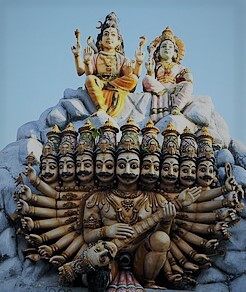
Ravana was a great devotee of Lord Shiva. It is believed that he and his mother worshipped at Koneswaram. According to the Ramayana, Ravana wanted to move the entire temple to India for his mother. As he tried to lift the rock, Lord Shiva pushed it down with his toe.
The Ravana Vettu (Ravana’s Cleft)
There is a deep crack in the rock at the temple site known as “Ravana Vettu.” Legend says Ravana, in a moment of frustration and grief, slashed the rock with his sword. Today, pilgrims visit this spot to pay respect to the king who was both a warrior and a devout believer.
Religious Significance. The Five Iswarams
Koneswaram is one of the Pancha Ishwarams, five coastal temples in Sri Lanka dedicated to Lord Shiva to protect the island from natural disasters.
For Hindus, this is a “Paadal Petra Sthalam,” meaning it is one of the greatest Shiva temples mentioned in the ancient Tevaram hymns. Devotees believe that a prayer offered at Koneswaram with a pure heart is never unanswered. The temple is especially crowded during the Maha Shivaratri festival, where thousands of people gather to chant and pray through the night.
The Magnificent Architecture
The architecture of Koneswaram is a beautiful blend of ancient Dravidian styles and modern restoration.
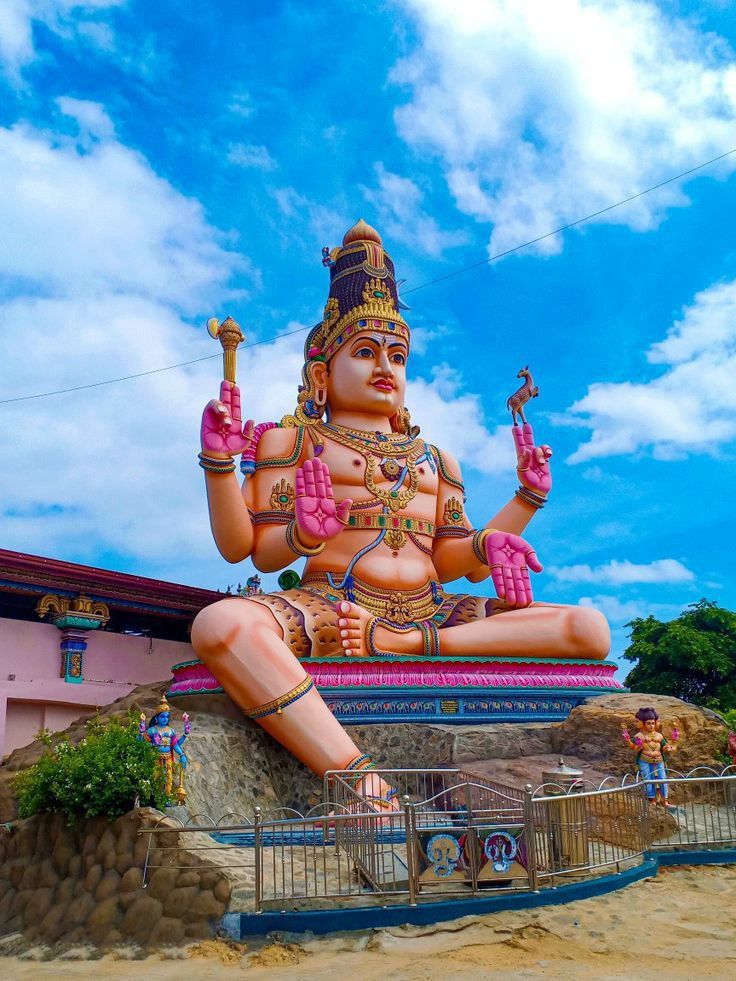
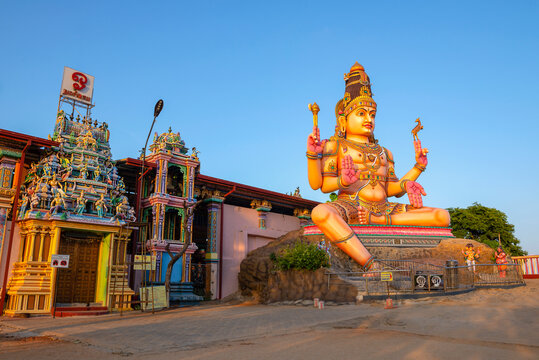
The Statue of Lord Shiva – As you walk towards the temple, you are greeted by a massive, golden-seated statue of Lord Shiva. It is one of the tallest of its kind in Sri Lanka and provides a perfect photo opportunity against the blue sky.
The Gopuram– The entrance tower (Gopuram) is decorated with intricate carvings of gods, goddesses, and mythical creatures, painted in vibrant colours.
The Interior Sanctuaries – Inside, you will find shrines for Lord Ganesh, Goddess Parvati, and Murugan. The atmosphere is filled with the scent of incense and the sound of bells, creating a sense of deep peace.
Topography and Geography, The Edge of the World.
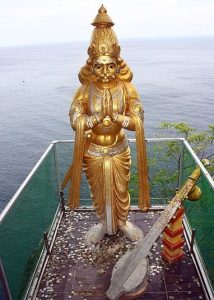
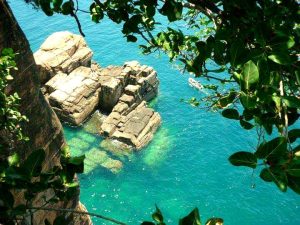
Koneswaram is built on Swami Rock, a massive cliff that rises nearly 400 feet above the Indian Ocean. This unique location offers a 360-degree view of the Trincomalee harbour (one of the largest natural harbours in the world) and the vast ocean.
Lovers’ Leap
Right next to the temple is a famous cliff known as “Lovers’ Leap.” While the name sounds romantic, it has a tragic history. Legend says a Dutch officer’s daughter jumped from this cliff when her lover sailed away. Today, it serves as a breathtaking viewpoint where you can watch the waves crash against the rocks below.
Why Koneswaram is a Major Tourist Attraction
If you are planning a trip to Sri Lanka, Trincomalee should be on your list, and Koneswaram is its crown jewel. Here is why tourists love it:
The View – There is no other place in Sri Lanka where you can see the ocean from such a height while standing in a temple.
The Wild Deer – As you walk through Fort Frederick to reach the temple, you will see dozens of wild Spotted Deer. They are very friendly and roam freely among the visitors.
The Spiritual Vibe – Even if you are not religious, the energy of the chanting and the ocean breeze creates a very calming experience.
Photography – Between the colourful temple art, the giant Shiva statue, and the turquoise ocean, your camera will be very busy!
Why You Should Travel to Koneswaram Now
Travelling to Koneswaram is more than just a temple visit; it is a complete experience.
Proximity to Beaches – After your morning visit to the temple, you can be at Nilaveli or Uppuveli beach in 20 minutes for a swim or some snorkelling at Pigeon Island.
Cultural Fusion – Trincomalee is a place where Tamil, Sinhala, and Muslim cultures live side by side. Exploring the town gives you a real taste of Sri Lankan unity.
Whale Watching – From the cliffs of Koneswaram, lucky visitors can sometimes spot Blue Whales in the distance during the season (March to August).
Essential Travel Tips for Visitors
To make the most of your trip, keep these simple tips in mind:
Dress Code – Since this is a sacred site, you must cover your shoulders and knees. You will also need to remove your shoes at the entrance.
Timing – The best time to visit is early morning (6:30 AM) or late afternoon (4:30 PM). The sun can be very hot at noon, and the stone floor can get quite warm.
Entrance – There is no entrance fee to the temple, but you might have to pay a small fee for shoe storage.
Photography – You can take photos outside, but be respectful and ask permission before taking photos of people praying or inside the main sanctum.
Conclusion.
A Journey of Faith and Beauty
Koneswaram Temple is a testament to Sri Lanka’s resilience. Having survived destruction and the passage of time, it stands today as a symbol of peace and beauty. Whether you are coming to seek blessings, study history, or enjoy the best view in Trincomalee, Koneswaram will leave a lasting impression on your soul.
Book your tour with us today and let us take you on a journey to the edge of the ocean!
Written by MMS