 info@matrixlankatours.com
 (+94) 75 826 2326

The Ultimate Guide to the Kandy Esala Perahera Festival, Sri Lanka
Witness the Grandest Cultural Pageant in Asia.
Ayubowan! Welcome to Kandy, the majestic hilltop cultural capital of Sri Lanka. When travellers plan a tropical holiday to our beautiful island, they usually think of tracking wild elephants, surfing on golden beaches, or tasting hot local curries. But Sri Lanka is also home to a rich, living history that stretches back over 2,500 years. If you want to experience the absolute peak of our vibrant culture, booking a trip during the world-famous Kandy Esala Perahera festival is a must-do.
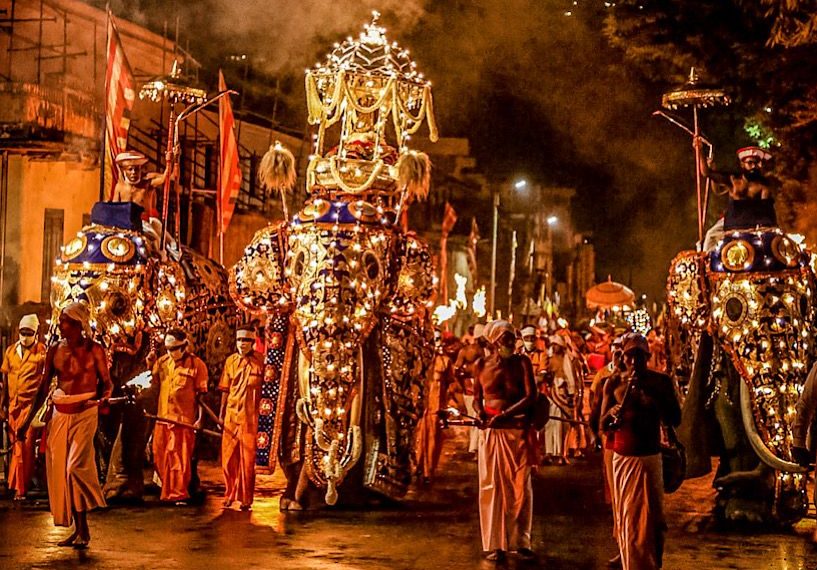
Held annually in July or August, the Esala Perahera is celebrated globally as one of the oldest, grandest, and most visually spectacular Buddhist festivals in all of Asia. For ten magical nights, the streets of Kandy transform into a swirling ocean of bright lights, rhythmic drumming, traditional dances, and beautifully costumed elephants. It is a breathtaking celebration that leaves every single international traveller completely amazed.
In this comprehensive, easy-to-read guide, we will share everything you need to know to plan the perfect cultural holiday around this festival. You will learn about the ancient history of the event, the various nights of the parade, what magnificent performances to look out for, and practical travel tips to secure the best seats safely.
The Sacred History
A Royal Tribute to the Tooth Relic.
The Kandy Esala Perahera is not just a commercial tourist parade; it is a deeply sacred religious ritual that has been performed with immense devotion for centuries. The festival is a grand combination of two ancient rituals: the “Esala” ritual, which was performed to pray to the gods for rain to grow healthy crops, and the “Dalada” ritual, which honours the Sacred Tooth Relic of Lord Buddha.
According to local historical records, the Sacred Tooth Relic was brought to Sri Lanka from ancient India in the 4th century AD, hidden safely inside the hair of a brave princess named Hemamali. The relic quickly became the ultimate symbol of royal power. It was believed that whoever possessed the Tooth Relic had the divine right to rule the entire island.
When the last independent kingdom was established in Kandy, the relic was placed inside the beautiful Temple of the Sacred Tooth Relic in Kandy (the Dalada Maligawa). In the mid-18th century, King Kirthi Sri Rajasinghe decreed that the sacred relic should be taken out of the temple once a year in a grand public procession so that ordinary citizens and travellers could see and worship it. That royal tradition has continued without a single break to this very day, maintaining the same rituals and royal pride.
The Structure of the Parade
Ten Nights of Growing Grandeur.
The entire festival spans over ten days, and it is divided into distinct stages that grow bigger, louder, and more crowded every single night. The parade is not just one single block of performers; it is actually a combination of five separate peraheras organised by the main temple and the four ancient shrines of the guardian gods (Natha, Vishnu, Katharagama, and Pattini).
Here is how the ten-night procession develops on the streets of Kandy.
1. Kumbal Perahera (The First Five Nights)
The festival begins with the Kumbal Perahera. Compared to the later nights, these processions are slightly smaller and quieter, but they are incredibly beautiful and much less crowded. It is the perfect time for family travellers or elderly tourists who want to experience the authentic cultural dances without facing massive street crowds.
2. Randoli Perahera (The Final Five Nights)
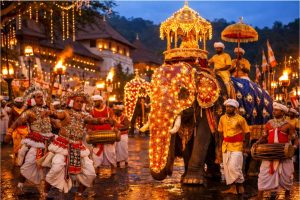
The word “Randoli” translates to “Queen’s Palanquins.” These final five nights are the absolute peak of the entire festival. The energy increases, the number of dancers doubles, and the most magnificent tuskers join the parade. The final night, known as the Maha Randoli Perahera, is the most spectacular event of all, where the entire city stays awake to celebrate.
What to Watch For
Spectacular Performers and Royal Elephants.
As you sit on the streets or viewing balconies watching the parade move gracefully past you under the moonlit sky, keep a sharp lookout for these iconic elements.
Whip Crackers and Fire Dancers.
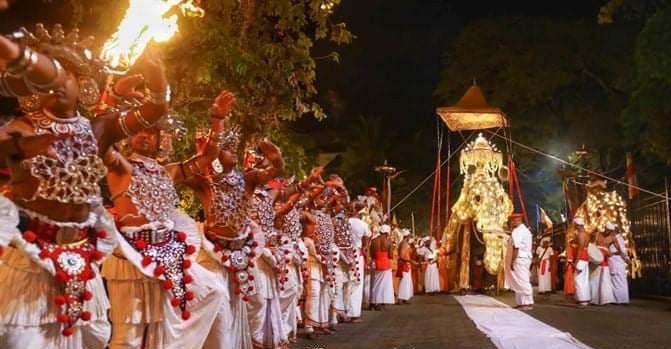
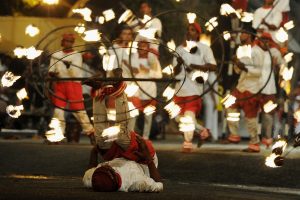
A group of intense whip crackers always leads the parade. The loud, cracking sound of their giant whips echoes through the streets, announcing that the perahera is approaching and clearing the path. They are immediately followed by acrobatic fire dancers who spin glowing wheels of fire through the dark air with incredible speed and skill.
Traditional Kandyan Dancers and Drummers.
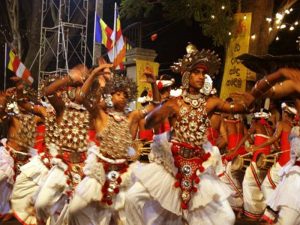
You will see hundreds of energetic traditional Kandyan dancers leaping and spinning gracefully to the complex, hypnotic beats of the traditional “Geta Beraya” drums. The male dancers wear the spectacular “Ves” costume, which includes a brilliant, heavy silver headdress that sparkles brilliantly under the torchlights. Watching their synchronised footwork and listening to the thunderous drums is a thrilling sensory experience.
- The Maligawa Tusker. Carrying the Sacred Relic.
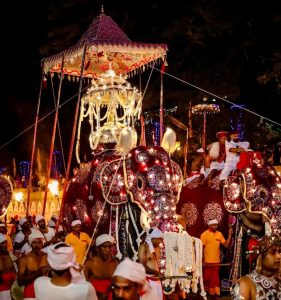
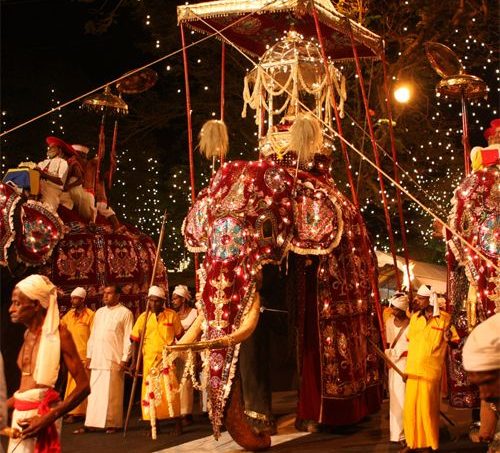
The most emotional and sacred moment of the night arrives when the grand Maligawa Tusker steps forward. This is a massive, majestic male elephant with giant tusks, selected specifically for his calm behaviour and noble look. He is completely covered in beautiful, illuminated golden silks and walks gracefully on a white carpet laid out on the road by temple attendants. On his back, he carries the grand golden casket containing the replica of the Sacred Tooth Relic, while people shout “Sadu! Sadu!” in deep devotion.
Festival Guide
Planning Your Kandy Perahera Schedule.
To help you understand the daily timeline and plan your hotel bookings in the hill country, we have created an easy-to-read chart detailing the festival sequence.
| Festival Stage | What Happens on the Streets? | Crowd Density | Best Travel Advice |
| Kap Situweenima | A sacred ritual where a young jackfruit tree is planted inside the four god shrines to start the festival. | Internal Shrines Only | Great for cultural researchers; no public street parades happen yet. |
| Kumbal Perahera | The first five nights of public street parades. Focused on traditional rituals and initial dances. | Moderate Crowds | Best time to watch if you want to avoid massive crowds and secure cheaper seats. |
| Randoli Perahera | The final five nights of grand parades. Features maximum elephants, full lights, and top dancers. | Extremely High | This is the peak experience. You must book hotel rooms and seats months in advance. |
| Day Perahera & Water Cutting | A daytime parade followed by a sacred water-cutting ritual at the Mahaweli River in Gatambe. | High (Daytime) | Excellent for daytime photography and seeing the costumes clearly in daylight. |
How to Watch the Perahera Comfortably
Essential Tips for Travellers.
Because this is a massive public religious event attracting hundreds of thousands of local pilgrims and global travellers, going unprepared can feel overwhelming. To ensure you stay comfortable and enjoy the magic safely, follow these standard practical tips.
1. Secure Your Viewing Seats Early.
While standing on the public pavements is completely free, you will have to sit on the ground for 6 to 8 hours to hold your spot. For international tourists, it is highly recommended to buy premium Kandy perahera viewing tickets. These tickets provide safe, elevated seats on shop balconies or custom wooden stands along the official route, complete with clean restroom access.
2. Dress Respectfully according to Buddhist Customs.
Because the Esala Perahera is fundamentally a deeply sacred religious festival organised by the Buddhist temple, travellers must dress modestly. Ensure your clothes completely cover your shoulders and your knees. Avoid wearing skimpy beach clothes, short skirts, or sleeveless tops. Wearing white or light-colored clothes is highly appreciated by the locals as it represents purity.
3. Plan Your Transport and Hotel Bookings Months.
During the festival season, hotel prices in Kandy increase rapidly, and rooms get fully booked nearly six months in advance. The main roads inside Kandy town close completely around 4:00 PM every afternoon to prepare the parade route. Plan to arrive in the city early in the morning so you do not get stuck in traffic outside the security boundaries.
- Credited to the Photographers.
Written by MMS
.