 info@matrixlankatours.com
 (+94) 75 826 2326


Discover Sri Lanka’s Sacred History of Anuradhapura
Ayubowan! Welcome to the grandest historical wonder of Sri Lanka. If you are preparing for a trip across our beautiful island, visiting the country’s cultural heart is a must. An Anuradhapura ancient city tour takes you back over 2,000 years. This magical city was the very first capital of ancient Sri Lanka and has served as the centre of royal power and Theravada Buddhism for over a millennium.
Today, Anuradhapura is recognised globally as a UNESCO World Heritage Site. It is not just an archaeological park full of crumbling walls; it is a sprawling, living sanctuary where ancient heritage seamlessly blends with modern faith. From massive brick stupas that rival the Pyramids of Giza to peaceful sacred gardens, this city offers an unforgettable travel experience. In this detailed guide, we will cover everything you need to plan the perfect trip to Anuradhapura.

Why You Must Visit the Anuradhapura Ancient City?
Anuradhapura is the crown jewel of Sri Lanka’s famous Cultural Triangle. Unlike many ancient cities around the world that feel like dead museums, Anuradhapura remains vibrant and spiritually alive. Every single day, thousands of pilgrims dressed in pure white travel from far corners of the island to offer fresh flowers, light earthen oil lamps, and chant prayers beneath the shade of sacred trees.
For international travellers, the city offers a unique window into ancient engineering, classical art, and profound spiritual traditions. The ancient kings of Sri Lanka built massive artificial lakes (tanks) and sophisticated irrigation canals that still supply water to local farmers today. Walking among these
Colossal monuments allow you to witness the sheer scale of a civilisation that flourished deeply while.
The Sacred Atamasthana (The Eight Holy Places)
When undertaking an Anuradhapura ancient city tour, the main focus for most visitors is the Atamasthana. These are the eight highly sacred locations that Lord Buddha is believed to have visited during his three spiritual journeys to Sri Lanka. Exploring these sites gives you a profound understanding of the island’s deep-rooted cultural identity.
1. Jaya Sri Maha Bodhi (The Sacred Fig Tree)

This is arguably the most sacred spot in the entire city. The Jaya Sri Maha Bodhi is a southern branch of the historical Bodhi tree under which Lord Buddha attained enlightenment in India. It was brought to Sri Lanka in the 3rd Century BC by Princess Sangamitta, the daughter of Emperor Asoka.
Planted in 288 BC, it is scientifically documented as the oldest human-planted tree in the world with a continuous known history. Walking through the quiet courtyards and listening to the rustling leaves of this ancient tree is a deeply moving experience that brings immediate inner peace.
2. Ruwanwelisaya (The Great Stupa)
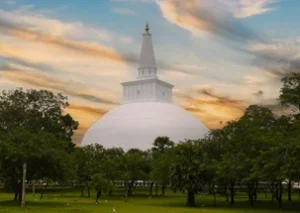
Built by the legendary warrior King Dutugemunu in 140 BC, the Ruwanwelisaya is a marvel of ancient architecture. Standing at a breathtaking height of over 300 feet, this massive white dome houses a significant collection of sacred relics of the Buddha.
The base of the monument is surrounded by a beautifully carved wall featuring hundreds of life-sized elephants standing shoulder to shoulder, symbolically carrying the weight of the massive structure. Seeing the giant white dome glowing warmly against a dark blue evening sky is a sight you will remember forever.
3. Thuparamaya (The First Stupa)
 Thuparamaya holds a distinct place in Sri Lankan history as the very first stupa built on the island after the formal introduction of Buddhism. Commissioned by King Devanampiya Tissa in the 3rd Century BC, it features a unique bell-like shape.
A concentric circle of stone pillars surround the stupa beautifully. These pillars once supported a massive wooden conical roof that protected the entire structure, showcasing the architectural ingenuity of early Sri Lankan builders.
4. Lovamahapaya (The Brazen Palace)
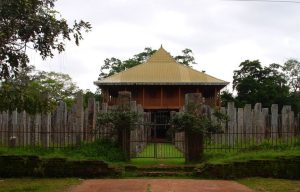 Located conveniently between the Jaya Sri Maha Bodhi and Ruwanwelisaya, Lovamahapaya appears today as a vast forest of 1,600 stone pillars standing in perfect rows. In its glory days, this was a massive
nine-story palace lined with a bright bronze roof.
It served as a grand assembly hall and residence for the monks. The bronze roof gleamed so brightly in the sun that it could be seen from miles away, earning it the famous title of the Brazen Palace.
5. Abhayagiri Dagoba (The Capital of Mahayana Buddhism)
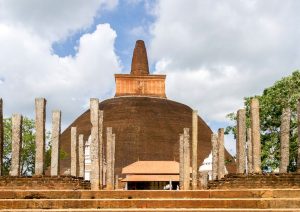 The Abhayagiri Dagoba is one of the most massive brick monuments built by mankind. Erected by King Valagamba in the 1st Century BC, it was the focal point of a grand monastic university that housed over 5,000 international monks.
The ruins surrounding the stupa contain some of the finest artistic treasures in Sri Lanka, including the world-famous Kuttam Pokuna (Twin Ponds) and beautifully preserved guardstones.
6. Jetavanaramaya (The Giant Brick Marvel)
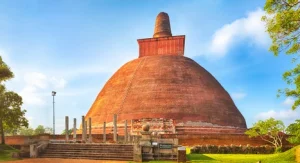 Jetavanaramaya is an engineering wonder that leaves modern architects astonished. Built by King Mahasen in the 3rd Century AD, it was the third-tallest structure in the ancient world, surpassed only by the top two Egyptian pyramids of Giza.
An estimated 93 million baked clay bricks were used to complete this colossal monument. The sheer Weight and scale of Jetavanaramaya stand as an undeniable testament to the complex organisational skills and engineering prowess of ancient Sri Lankans.
7. Mirisavetiya Stupa
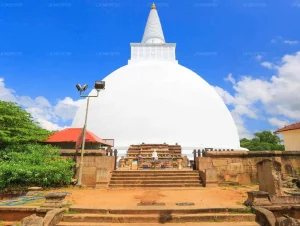
This beautiful stupa was also built by King Dutugemunu after his historic victory. According to local legend, the king placed his royal sceptre, which contained a sacred relic, into the ground before bathing in the nearby lake. When he returned, the sceptre could not be moved by any force. Taking this as a divine sign, the king constructed this beautiful stupa directly over the spot.
8. Lankarama Stupa
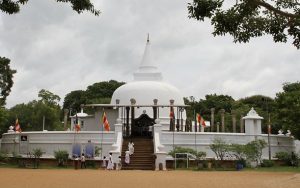
Built by King Valagamba, this charming stupa is very similar in style to Thuparamaya. It features beautiful rows of stone pillars that once supported a protective round roof structure. The calm, shaded environment makes it a perfect place to sit quietly and meditate away from the midday heat.
Hidden Secular Gems and Ancient Engineering
While the temples form the spiritual core of the city, an Anuradhapura ancient city tour also reveals the daily life, artistic heights, and public infrastructure of the ancient kingdom.
The Kuttam Pokuna (Twin Ponds)
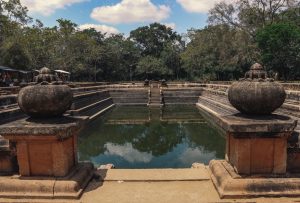
These two beautifully constructed stone pools were used by the monks of Abhayagiri Monastery for ritual bathing. The architectural precision is flawless. Water passes through an advanced filtering and underground piping system before entering the pools through beautifully carved dragon spouts (Makara). It shows how deeply the ancient people understood water conservation and sanitation.
The Samadhi Buddha Statue

Carved from a single block of granite in the 4th Century AD, this statue depicts Lord Buddha in a state of deep, undisturbed meditation. The artistic brilliance lies in the facial expression. Depending on the angle of the sunlight and where you stand, the face appears to change from subtle sadness to profound joy and absolute peace.
Essential Travel Tips for Your Visit
| Travel Detail | Important Information & Tips |
| Best Time to Visit | December to March (Cooler weather) or early mornings (6:00 AM) and late afternoons (4:30 PM). |
| Strict Dress Code | You must cover your shoulders and knees. Avoid hats and shoes inside sacred boundaries. Wear white to blend in. |
| Getting Around | Bicycles are highly recommended for exploring the flat, tree-shaded paths of the archaeological park. |
| Ticket Information | Foreigners require a cultural triangle ticket (approx. $30 USD) covering most main sites. Keep cash handy. |
Written by MMS